

Kentlands history
The History of Kentlands: A Visionary Community
Nestled in the heart of Gaithersburg, Maryland, Kentlands stands as one of the nation's pioneering examples of New Urbanism—a design movement emphasizing walkable neighborhoods and a sense of community.
Beginnings
Kentlands originated from a 1723 land grant and later became part of Henry Clagett’s holdings in the mid-18th century. In 1852, Frederick A. Tschiffely acquired over 200 acres, naming the estate “Wheatlands.” By 1900, his son built the iconic brick mansion and other structures, earning the nickname “The Bricks.” The Tschiffely family, prominent in Washington’s pharmaceutical industry, lived there while managing the estate and commuting to the city.
Over time, Wheatlands transitioned from farmland to a summer retreat for the Tschiffely family, with each generation expanding the estate and supporting local development. In 1942, Washington lawyer Otis Beall Kent purchased the 600-acre property, renamed it Kentlands, and reimagined it as a nature habitat and model farm.
Kent expanded the mansion, added lakes for wildlife and irrigation, and preserved parts of the estate as sanctuaries. Before his death in the 1960s, he deeded portions to conservation organizations and envisioned the estate’s future as a natural, beautiful neighborhood called Lakelands. Though Kent’s plans were unrealized, Kentlands' annexation into Gaithersburg in 1966 set the stage for its later development.
The Evolution of Kentlands
-
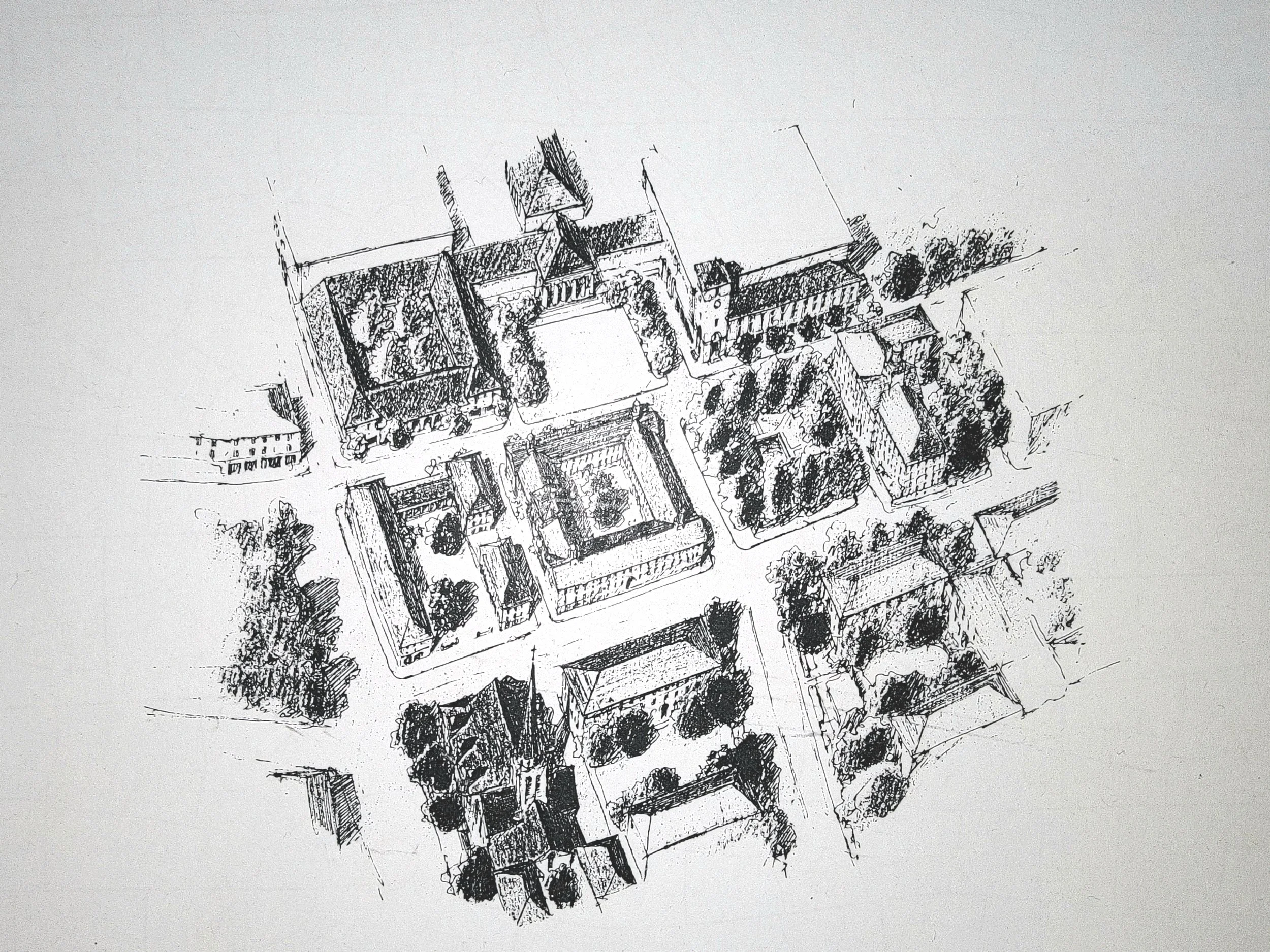
In 1988, developer Joseph Alfandre purchased Kentlands with the vision of creating a complete town based on traditional neighborhood planning principles. Collaborating with urban planners Andrés Duany and Elizabeth Plater-Zyberk, as well as the City of Gaithersburg’s leadership, Alfandre transformed the 352-acre site into a groundbreaking model of town planning.
Key elements, such as the historic Tschiffely-Kent buildings and natural landmarks, were incorporated into the city’s parks system, ensuring a strong civic connection. A five-day charrette brought together stakeholders to develop a master plan, leading to the creation of the MXD zoning code, which allowed a mix of residential and commercial uses. This innovative approach laid the foundation for Kentlands' vibrant, community-focused development, guided by the Kentlands Community Foundation.
The design of Kentlands prioritized fostering community through pedestrian-oriented planning and integrating daily life essentials within walkable distances. Houses, shops, businesses, schools, recreation, and places of worship were placed close together, connected by sidewalks and paths. The design also emphasized diversity through a mix of residents and housing types, catering to different life stages and income levels.
Initially developed by Joseph Alfandre, the project transitioned to the Great Seneca Development Corporation, an affiliate of Chevy Chase Bank. Later, the adjacent Lakelands neighborhood was developed, involving Kentlands residents in planning. The addition of Lakelands expanded the shared commercial area and increased density, enhancing the community's vibrancy and sustainability.
-
Kentlands features a harmonious blend of public and private spaces, offering a variety of green areas, including parks, playgrounds, lakes, gardens, a village green, and nature trails. Fences define boundaries between private and shared spaces, fostering a sense of community while maintaining privacy.
The Kentlands Citizens Assembly manages neighborhood parks and common areas, while the City of Gaithersburg oversees the lakes and larger parks. Central to community life, the Main Street Pavilion provides a versatile outdoor space for events like farmer’s markets and gatherings
-
The City of Gaithersburg preserves many historic buildings from the Tschiffely and Kent families, integrating them into community life.
The Kentlands Mansion serves as a venue for events and an art gallery, while the Arts Barn features artist studios and a theater in the renovated barn.
The Carriage House, owned by the Kentlands Citizens Assembly, is now a community space for meetings, classes, and the Kentlands Community Foundation.
Some historic structures remain privately owned, including the Farm Manager’s House and a replica Gatehouse. Scenic features like the unused Tschiffely crypt and garden house ruin enhance the neighborhood’s charm, bridging its history with its vibrant present. The Community Architect’s Office links Kentlands’ past to its future
-
The Kentlands Clubhouse serves as the neighborhood’s hub for social, administrative, and recreational activities. Owned by the Kentlands Citizens Assembly, it includes a pool, tennis courts, and a lawn, providing space for meetings, events, sports, and clubs.
Key community facilities such as Rachel Carson Elementary School, the Kentlands Children’s Center, and the Church of Jesus Christ of Latter-Day Saints further integrate education, childcare, and worship into the walkable neighborhood.
-
In 2017, the Kentlands Citizens Assembly (KCA) collaborated with the Kentlands Community Foundation (KCF) to launch the One Main Street Initiative (OMSI), aiming to revitalize Main Street as a vibrant social and cultural hub while adhering to New Urbanist principles. Funded through the Initial Titleholders Contribution Fund, OMSI sought to enhance quality of life, boost property values, and establish a cohesive Downtown Kentlands.
The initiative engaged professional expertise, including Rich Bradley of The Urban Partnership and Live Work Learn Play (LWLP), to develop a strategic vision, stakeholder engagement, and an actionable plan for a thriving retail district. The OMSI Committee, comprised of Kentlands and Lakelands residents with diverse expertise, worked collaboratively to ensure alignment with the community's goals and values.
The Committee was comprised of Kentlands and Lakelands residents with a wide variety of skill sets and included Neil Burka (Federal Realty/Property Manager Bethesda Row), Chandra Wright (owner of SVN/Wright Realty, Commercial Brokerage), Mary Ann Pettorini (Branding and Marketing Advisor), John Schlichting (Director of Planning, City of Gaithersburg), Jodi Rapaport (owner of My Big Finds and liaison to the Downtown Kentlands Working Group), Joe Allen (City of Gaithersburg Transportation Committee), Maura Winkworth (Attorney), Ruthzaly Weich (then Board Chair KCF/New Urban Planner), and Mariann Zylstra (former KCF Director/Finance and Administration).